
When a transaction involves both money and trust, risk becomes inevitable. An escrow account helps reduce that risk by ensuring that funds are released only when predefined conditions are met.
Escrow accounts are widely used in real estate deals, business transactions, online purchases, and legal settlements to enable secure and fair exchanges between parties.
What is an escrow account?
An escrow account is a financial arrangement where a neutral third party holds funds, documents, or assets on behalf of two parties until specific conditions are fulfilled.
Once all agreed-upon terms are met, the escrow agent—typically a bank or a trusted intermediary releases the funds or assets to the appropriate party. This ensures that both sides meet their obligations before the transaction is completed, reducing risk and improving trust.
How Does an Escrow Account Work?
An escrow account provides an additional layer of security by involving a neutral third party to oversee the transaction. The escrow process typically follows these steps:
Step 1: Agreement between Parties
The buyer and seller agree on the terms of the transaction, clearly outlining the conditions that must be met.
Step 2: Funds deposited in escrow
The buyer places the agreed amount or asset into the escrow account. The escrow agent verifies the deposit and ensures clarity on the agreed terms.
Step 3: Seller fulfills obligations
The seller delivers goods, services, or transfers ownership as per the agreement, while the escrow agent monitors progress.
Step 4: Funds are released
Once all conditions are fulfilled and both parties agree, the escrow agent releases the funds to the seller. If conditions are not met, the funds are returned to the buyer.
When Should You Use an Escrow Account?
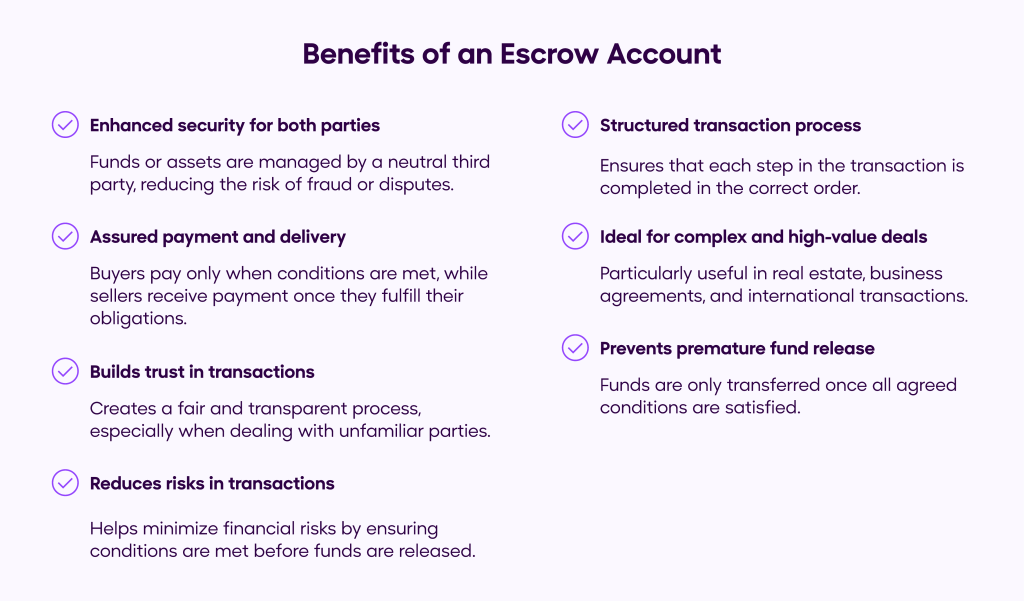
Escrow accounts are ideal in situations where trust, security, and conditional payments are important. You should consider using an escrow account for:
- High-value transactions
- Buying or selling property
- Online marketplace purchases
- Business agreements with milestones
- Legal settlements
Conclusion
Escrow accounts are essential for making transactions safer and more reliable. They act as a middle ground where funds or assets are held until all agreed conditions are met, protecting both the buyer and the seller. This helps avoid disputes and ensures everyone involved fulfills their part of the deal.
Whether it’s for buying a home, completing a business deal, or handling private transactions, escrow accounts add clarity and confidence to the process. By keeping things clear and organized, they help transactions go smoothly and make them a smart choice for both simple and complex deals. Understanding what an escrow account is and how it works can help individuals and businesses make safer financial decisions.
FAQs
1. What is an escrow account in India?
An escrow account in India is a secure account managed by a third party that holds funds or assets until both parties in a transaction fulfill the agreed-upon conditions.
2. What is an escrow account used for?
It protects both parties in a transaction by holding money or assets until all conditions are met, ensuring a secure and reliable exchange.
3. What is required to create an escrow account?
To create an escrow account, the parties need to agree on the transaction terms, submit the necessary documentation, and choose an escrow agent to oversee the account.
4. How to open an escrow account in India?
To open an escrow account in India:
- Select a Bank: Choose a bank offering escrow services.
- Inquire and Submit Documents: Contact the bank and provide necessary documents like ID and transaction details.
- Agree on Terms: Finalize conditions and fees for the account.
- Fund the Account: Deposit the agreed amount to secure the transaction.
- Monitor Transactions: Ensure all activities comply with the agreed terms.
- Account Closure: Once the transaction concludes, close the account as per the agreement.
This process ensures a secure and structured approach to managing funds during a transaction.
5. What happens to money in an escrow account?
Money in an escrow account is held by a third party until the transaction is completed. Once all conditions are met, it is released to the seller. If the deal falls through, the funds are returned to the buyer or given to the seller, depending on the agreement.